































SAP and Fabric: seamless controlling
Bissantz brings SAP data into Microsoft Fabric as a ready-to-use controlling model – with continuous history, analysis and planning.
continuous time series beyond the S/4HANA go-live
prebuilt modules for accounting, sales, logistics and production
planning and reporting on the same data model
predictable costs for capacity, licenses and operations
The data source
SAP supplies the data – which first lands in OneLake as raw data with cryptic table and column names. Bissantz knows the SAP base tables and CDS views and turns them into a business‑ready controlling model.

The platform
Microsoft Fabric provides the platform, Bissantz the ready‑made controlling model on top: KPIs, hierarchies and history are already in place. Analysis, planning and reporting run on one data foundation.
Getting the most out of SAP and Fabric
SAP provides the data, Microsoft Fabric the platform. Bissantz adds the KPIs, hierarchies and history controlling needs.
For controlling with SAP and Fabric, the platform is only the starting point. In OneLake, SAP raw data arrives with cryptic table and column names—without KPIs, hierarchies or plan-actual variances. These only emerge in a technical model, and without one there is nothing to build reports on.
Bissantz closes this gap for SAP and Fabric with Bissantz ERP Solutions for SAP. Years of SAP project experience are built into prebuilt modules that know exactly which SAP base tables to access. Controlling and finance get reliable figures without having to build the model themselves.

Too many paths, no clear plan?
Operating model, extraction method, target architecture, capacity: between SAP and Fabric, many decisions depend on each other, and not every path is permitted. Bissantz assesses your starting point with weighted recommendations and defines the next steps.

History lost after go-live?
In a greenfield implementation of S/4HANA, historical transaction data is not migrated, so the prior year is missing as a benchmark. Bissantz maps the old and new SAP worlds to each other and preserves a continuous time series.

Planning overlooked in the migration?
Many projects replacing SAP BW focus on reporting alone. Planning drops out of sight until it is missing in the next planning cycle. Bissantz delivers planning and reporting on the same model in Fabric.
Market leaders and hidden champions trust us.




Microsoft fabric for SAP
with a proven technical model
With Microsoft Fabric for SAP, Bissantz delivers accounting, sales, logistics and production as ready-made modules
With Microsoft Fabric for SAP, companies book subject modules from Bissantz in which transaction data and KPIs are already modeled. Accounting covers the balance sheet and cost accounting, Sales covers multi-level contribution margin accounting, and Production covers product costing. The Common Master Data module provides shared master data such as company codes and currencies.
In Fabric, Bissantz builds a medallion architecture on this basis, all the way to the semantic model. Hierarchies are in place, and cumulative values and prior-year comparisons are prepared as calculation groups. Controlling builds reports instead of writing DAX formulas – in DeltaMaster or Power BI.
SAP integration with OneLake in Microsoft Fabric
Bissantz tailors SAP integration with OneLake in Microsoft Fabric to your starting point. Operating model, data volume and refresh frequency determine the extraction method; a Bissantz assessment tool provides weighted recommendations.
On-premises and private cloud systems connect the modules directly to SAP base tables, the public cloud uses CDS views. Bissantz has already mapped the old and new SAP worlds and identified the relevant ones among numerous, partly overlapping CDS views.

Stable extraction methods
Tried and tested interfaces such as CDS views and OData.

History without redesign
Existing tables are filled from CDS views; data warehouse and reports stay unchanged.

Costs and operations clarified upfront
Capacity and licenses calculated upfront; operations handled by Bissantz upon request.
Analysis, planning and reporting on
SAP data in Fabric
With SAP and Fabric, DeltaMaster guides you from variance to root cause—and planning runs on the same model
FAQ: Frequently Asked Questions
Key information at a glance, answered concisely and clearly
SAP history is preserved in Microsoft Fabric when the old and new SAP worlds are mapped—exactly what Bissantz ERP Solutions for SAP do.
The cost of SAP Fabric is based on capacity, user licenses, and additional products and operations, such as mirroring.
A dedicated data warehouse such as Microsoft Fabric for SAP becomes more important with S/4HANA, not obsolete.
Free of charge for you
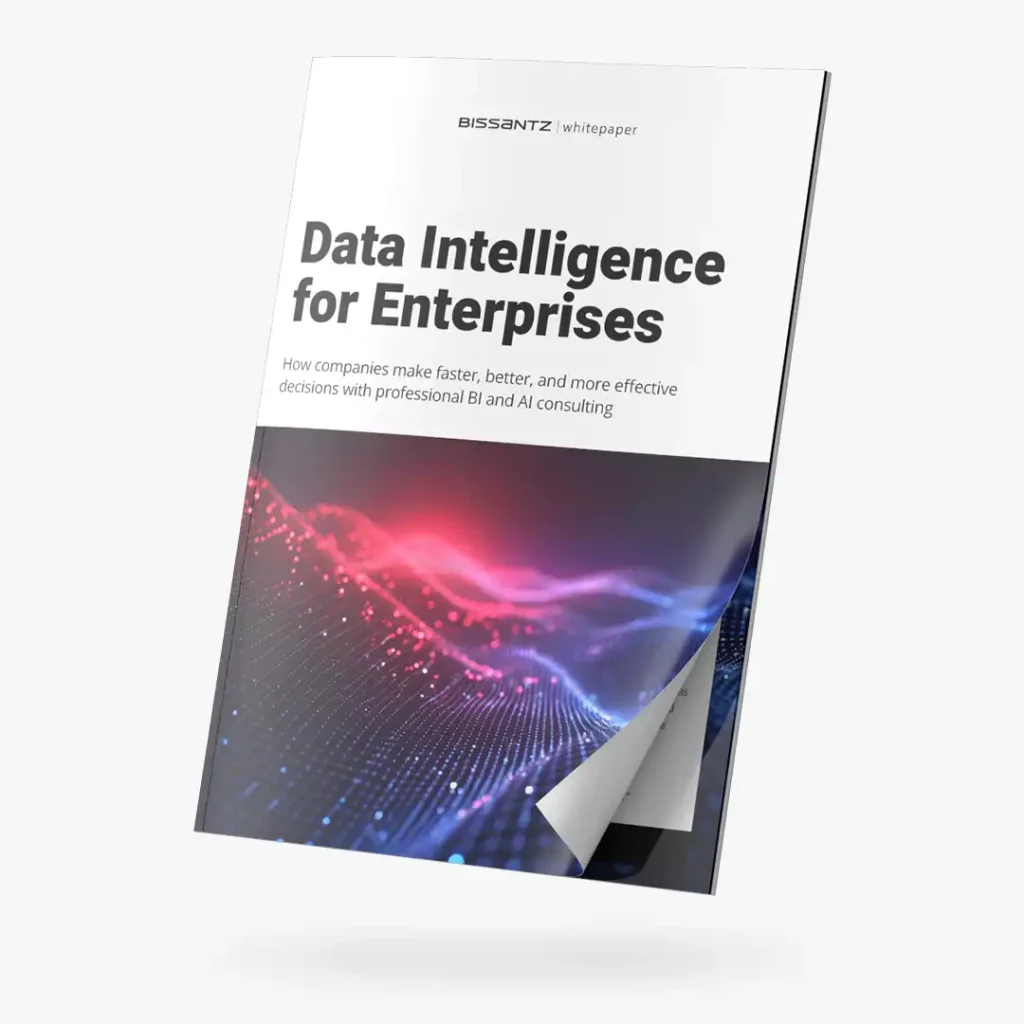
How companies make faster, better, and more effective decisions with professional BI and AI consulting