






























What is automation?
Automation refers to the transfer of recurring or rule-based tasks to technology or software in order to make processes more efficient, faster, and less error-prone. It reduces manual effort, improves process quality, and enables employees to focus on value-adding activities and well-informed decisions. Depending on the use case, automated processes can operate with minimal or even no human intervention.
| Feature | Description |
| Category | Process management / digital transformation |
| Application | Transferring manual or rule-based tasks to technical systems |
| Typical areas of application | Controlling, accounting, manufacturing, logistics, marketing, IT, customer service |
| Related terms | Digitization, artificial intelligence, workflow automation, Business Process Management |
| Benefits | Increased efficiency, error reduction, cost reduction, scalability, better decision-making foundations |
At a glance
practical benefits such as increased efficiency, error reduction, scalability, and cost reduction
reduces errors, lowers costs, and creates scalability – but not without risks
relevant areas of application include controlling, accounting, marketing, industry, and logistics
Automation definition
Automation refers to the transfer of previously manual tasks, processes, or decisions to technical systems, machines, or software solutions. The goal is to make processes more efficient, faster, and less error-prone – ideally with minimal or no human intervention. Depending on the system, this may involve predefined rules, programmed workflows, or, in more advanced applications, adaptive technologies such as artificial intelligence (AI).
As these enabling technologies continue to advance, automation is increasingly becoming a strategic factor in innovation and competitiveness. It shapes not only work processes, but also business models and the way data is handled in the digital economy.
What types of automation are there?
Automation can be divided into different types based on their technological sophistication, areas of application, and degree of automation:
Technological forms of automation
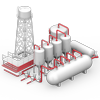
Mechanical: This form is based on the use of physical machines and robots, particularly in industrial manufacturing. It automates manual activities such as assembly, transportation, or packaging.
Electrical: Here, electrical signals control technical processes, for example in building, energy, or vehicle technology. This enables applications such as automatic door opening or climate control.
Digital or software-based: This type of automation is implemented in IT systems and includes technologies such as Robotic Process Automation (RPA), workflow automation, and Business Process Management (BPM). Its goal is to automate recurring, rule-based tasks in administration, IT, and service operations.
Intelligent: Intelligent automation is an advanced form of digital automation. It integrates AI, machine learning, and data analysis to automate complex tasks such as decision-making, language processing, or pattern recognition. Examples include chatbots, virtual assistants, and AIOps platforms.
Degrees of automation and application levels
Task or basic automation: This entry-level form focuses on individual, simple routine tasks – for example, automatically forwarding emails or populating form fields. It reduces the workload for users and minimizes manual errors.
Process automation: Process automation transfers entire workflows to devices or systems. RPA, workflow engines, and BPM tools can be used to structure, standardize, and accelerate end-to-end processes.
Partial and full automation: Depending on the degree of automation, a distinction is made between partial automation, where machines take over only individual steps while humans remain involved, and full automation, where the entire process – from input to control – is performed autonomously by technical systems.
What are the reasons for automation? – Benefits of automation
Companies automate processes for various reasons – from increasing efficiency and optimizing processes to addressing skilled labor shortages. The following benefits illustrate why automation is now used in virtually every industry:
Higher efficiency and productivity: Automation accelerates workflows, enables continuous operation around the clock, reduces manual intervention, and thereby increases performance and productivity.
Error reduction and improved quality: Automating business processes ensures that they run consistently and according to standardized procedures. This increases accuracy, minimizes errors, and helps maintain a high level of quality.
Cost reduction: Lower error rates and staffing requirements, combined with more efficient resource utilization, can lead to significant savings in personnel and operating costs as well as investments.
Better scalability and flexibility: Automated systems can be adapted more easily to new requirements or growing business volumes.
Response to skilled labor shortages: Automation can compensate for staffing shortages without compromising the company’s performance.
Better decision-making foundations through data analysis: Software solutions such as DeltaMaster collect and process data using standardized and automated methods, thereby supporting well-informed, data-driven decisions – for example in finance or manufacturing.
Disadvantages of automation
Despite its many benefits, automation also presents several challenges that companies should not overlook when planning and implementing it:
Changes to jobs and job losses: Recurring tasks may be eliminated, which can create uncertainty among employees or lead to the reduction of certain positions.
High initial investments: Implementing automated systems can involve significant costs for technology, infrastructure, and training.
Complexity and integration effort: Implementing automation often requires existing processes to be analyzed extensively, adapted, or completely redesigned – particularly when legacy IT systems are involved.
Dependence on technology and vendors: Automation can increase vendor lock-in, particularly with proprietary platforms or cloud solutions.
Data protection and IT security: Depending on the application, ensuring compliance with data protection requirements and securing automated processes can become more complex.
Digitization vs. automation – Comparing the terms
In the context of digital transformation, the terms automation and digitization are often used interchangeably, although they have different meanings:
Automation describes the process of using technology – such as machines, software, or AI – to transform manual or analog processes into automated processes. It is the methodological implementation aimed at increasing efficiency, speed, and accuracy.
Digitization is the broader term and refers to converting analog information and processes into digital form. It provides the foundation for automation but has a broader scope, including digital business models, communication, and data processing.
| Term | Meaning | Distinction |
| Digitization | Conversion of analog information and processes into digital form | Broader term; provides the foundation for automation |
| Automation | Process of transferring manual tasks to technical systems | Methodological implementation; describes the process |
Use cases: Where can automation be applied?
The possible applications of automation technologies are broad and can be integrated meaningfully into almost every industry and area of a company. Typical use cases include:
Decision management: Through automated controlling – for example with Business Intelligence tools such as DeltaMaster – well-founded decisions can be made faster and more accurately.
Accounting: Routine activities such as creating and settling invoices, depreciation, or maintaining data can be automated with automation tools.
Industry: In industry, robots can automate processes such as assembly, packaging, or quality inspection on production lines.
Marketing: From automated email campaigns to lead generation, companies can reach customers more precisely and quickly and achieve higher ROI through data-driven processes.
Supply chain: Warehousing, shipping, and inventory management can be automated to make supply chains more efficient and transparent.
Workflows: Rule-based logic can be used to automate and accelerate processes, for example in procurement or customer service.
Bissantz: automation in controlling
DeltaMaster by Bissantz is designed to automate processes end to end – from data integration through analysis and visualization to report generation. Routine activities such as highlighting variances, consolidating KPIs, or creating dashboards are performed automatically and according to standardized procedures.
Thanks to intelligent AI capabilities, DeltaMaster can independently identify anomalies, present them in a decision-oriented way, and derive automated recommendations for action. Users benefit from greater consistency, time savings, and more meaningful insights – in controlling, reporting, financial planning, or the management of operational processes. In this way, automation becomes the foundation for smarter business management.
One specific use case, for example, is the automated analysis of sales performance by region, product, and customer. With Bissantz, the controlling department can investigate at the click of a button why revenue in a particular region is falling short of the previous year’s figure or the forecast. To do this, key metrics such as revenue, sales volume, margin, and order intake are analyzed across various dimensions, and notable deviations are highlighted.
If the analysis shows, for example, that the decline in revenue is primarily concentrated among a few customers and a specific product group, the sales team can receive recommendations for targeted measures and respond immediately. At the same time, it becomes clear whether the cause lies in lower volumes, price discounts, or an unfavorable product mix. The technical evaluation and implementation of the measures remain the responsibility of management and the relevant sales staff.
FAQ – Frequently asked questions
Automation refers to the transfer of manual or rule-based tasks to technical systems, machines, or software with the goal of making processes more efficient, faster, and less error-prone.
Digitization is the broader term and refers to converting analog processes and information into digital form. Automation describes the specific process in which technology takes over manual tasks – it relies on digitization but goes beyond it.
Intelligent automation combines traditional process automation with artificial intelligence and machine learning, making it possible to automate even complex tasks that are not entirely rule-based.
Risks include high initial investments, integration effort, dependence on technology vendors, data protection issues, and potential impacts on employment and work structures.
DeltaMaster automates the entire process chain from data integration through analysis to report generation. AI capabilities independently identify anomalies, visualize them in a decision-oriented way, and derive recommendations for action – for greater consistency and efficiency in controlling.
Summary
Automation is a key driver of digital transformation: it transfers manual and rule-based tasks to technical systems, creating the foundation for more efficient, scalable, and error-resistant processes. Today, its scope ranges from mechanical manufacturing to AI-supported decision support. With DeltaMaster, Bissantz consistently applies this approach in controlling – as an end-to-end automated process chain that relieves controllers of routine tasks and gives them more time for interpretation, contextualization, and well-informed decision-making.
Free of charge for you
Quickguide "Business Intelligence" – download now